

Vacuum pumps are devices used to remove gas molecules from a sealed volume, creating a vacuum or low-pressure environment. They are widely used in various industries, including manufacturing, pharmaceuticals, food processing, and scientific research. One type of vacuum pump is the liquid ring vacuum pump. It operates by using a liquid, typically water, as the sealing and cooling medium. The pump consists of an impeller with blades that rotate inside a cylindrical casing. As the impeller rotates, it creates a centrifugal force that pushes the liquid towards the casing walls, forming a liquid ring. This liquid ring acts as a seal between the suction and discharge sides of the pump. When the pump is in operation, gas is drawn into the pump through the suction port. The rotating impeller then compresses the gas, causing it to be trapped in the liquid ring. The gas is then expelled through the discharge port, while the liquid ring absorbs the heat generated during compression. The liquid ring also acts as a lubricant for the impeller, reducing wear and extending the pump's lifespan. Liquid ring vacuum pumps have several advantages. They can handle a wide range of gases, including corrosive and explosive ones. They are also capable of handling liquid carryover, making them suitable for applications where liquid and gas mixtures are present. Additionally, they are relatively simple in design, easy to operate, and require minimal maintenance. However, liquid ring vacuum pumps have some limitations. They are not as efficient as other types of vacuum pumps, such as rotary vane pumps, and may consume more energy. They also require a constant supply of liquid, which can be a limitation in certain environments. Furthermore, the liquid ring can be susceptible to contamination, which may affect the pump's performance. In summary, liquid ring vacuum pumps are devices that use a liquid ring to create a vacuum by removing gas molecules from a sealed volume. They have various applications but may have lower efficiency compared to other vacuum pump types and require a constant liquid supply.
Kupno i sprzedaż używanego sprzętu Liquid Ring w FEC Assets. Oferujemy Państwu szeroki wybór używanych, odnowionych i używanych urządzeń Liquid Ring dla przemysłu farmaceutycznego, chemicznego, spożywczego i opakowaniowego. Proszę przejrzeć nasze aktualne zasoby używanego sprzętu Liquid Ring na sprzedaż lub skontaktować się z nami, aby sprzedać nadwyżkę sprzętu Liquid Ring za pośrednictwem naszej profesjonalnej usługi odzyskiwania inwestycji.
Liquid Ring Producenci
Nash
Nash to renomowana firma specjalizująca się w produkcji pomp próżniowych z pierścieniem cieczowym. D
SIHI
SIHI, skrót od Sterling SIHI, to firma znana ze swojej specjalizacji w dziedzinie technologii transp
Filtr
Główne kategorie
(1)Kategorie
(1)Producenci
(1)Modele
(3)Lokalizacje
(2)Numer seryjny
Typ pompy
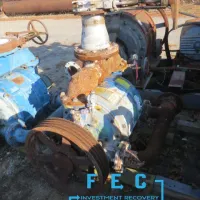
Nash Vacuum Pump, Model CL1003, 1,000 CFM
Używana pompa próżniowa z pierścieniem cieczowym Nash, model CL1003, o wydajności 1 000 CFM, wyprodukowana w 2008 r.
Nash - CL1003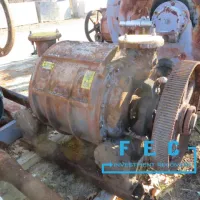
Nash Vacuum Pump, Model CL2000, 2,000 CFM, 100 HP
Używana pompa próżniowa z pierścieniem cieczowym Nash, model CL2000, o wydajności 2000 CFM, z silnikiem o mocy 100 KM, 1780 obr.
Nash - CL2000
Nash Vacuum Pump System, Model SC 2/7, C/S, 200 CFM, 10 HP, (2)
Używany system próżniowy Nash, składający się z (2) pomp próżniowych Nash model SC2/7, konstrukcja ze stali węglowej, nominalnie 200 cfm każda, z silnikiem 10 KM, 230/460 V z tłumikami, zamontowany na jednostkowej podstawie z panelem sterowania, pompy nr seryjne 99D1979, 03D0308.
Nash - SC2/7