

Centrifuges are laboratory instruments used to separate components of a mixture based on their density and size. They work on the principle of centrifugal force, which is the force exerted on an object moving in a circular path. By spinning samples at high speeds, centrifuges generate this force, causing the denser particles to move towards the outer edge of the rotating disc, while the lighter particles remain closer to the center. A disc centrifuge is a type of centrifuge that consists of a rotating disc or rotor. The rotor is divided into several compartments or channels, which are filled with the sample to be separated. As the rotor spins, the centrifugal force pushes the particles towards the outer edge of the channels, forming distinct layers based on their density. The denser particles settle at the bottom of the channels, while the lighter particles remain closer to the top. Disc centrifuges are commonly used in various scientific and industrial applications. They are particularly useful for separating particles of different sizes, such as in blood samples, where they can separate red blood cells, white blood cells, and plasma. They are also used in the purification of proteins, separation of DNA fragments, and analysis of nanoparticles. One of the limitations of disc centrifuges is their limited capacity. The number of samples that can be processed simultaneously is determined by the number of channels in the rotor. Additionally, the separation efficiency may be affected by the size and density of the particles, as well as the speed and duration of the centrifugation process. Care must be taken to ensure that the samples are properly loaded and balanced to avoid any imbalances or disturbances during the centrifugation process. In conclusion, disc centrifuges are powerful tools for separating components of a mixture based on their density and size. They find applications in various scientific and industrial fields, but their capacity and separation efficiency are subject to certain limitations.
Kupno i sprzedaż używanego sprzętu Disc w FEC Assets. Oferujemy Państwu szeroki wybór używanych, odnowionych i używanych urządzeń Disc dla przemysłu farmaceutycznego, chemicznego, spożywczego i opakowaniowego. Proszę przejrzeć nasze aktualne zasoby używanego sprzętu Disc na sprzedaż lub skontaktować się z nami, aby sprzedać nadwyżkę sprzętu Disc za pośrednictwem naszej profesjonalnej usługi odzyskiwania inwestycji.
Disc Producenci

Alfa Laval
Alfa Laval jest renomowaną globalną firmą specjalizującą się w produkcji i dystrybucji wirówek, a je
Filtr
Główne kategorie
(1)Kategorie
(1)Rok budowy
(2)Producenci
(3)Modele
(3)Lokalizacje
(2)Konstrukcja wirówki
Maksymalna prędkość bębna
Materiał konstrukcyjny
Napięcie
Numer seryjny
Przeciwwybuchowy
Alfa-Laval BD120C Centrifuge System
System wirówkowy Alfa-Laval BD 120C obejmuje: wirówkę: separator talerzowy BD 120C; moduł cieczy procesowej i serwisowej; zespół odbioru osadu; zespół pneumatyczny; panel operatorski; zawory PBM; miernik zmętnienia; układ rozruchowy i sterujący; oraz zestaw narzędzi do separatora.
Alfa Laval - BD120C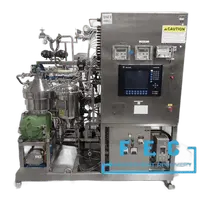
Westfalia Disc Centrifuge, Model CSA 8-06-476
Używana wirówka talerzowa separacyjna Westfalia, model CSA 8-06-476, powierzchnie styku produktu ze stali nierdzewnej, separacja cieczy/ciał stałych, prędkość znamionowa 9 160 obr/min, 1,0 g/cm3 "cieczy ciężkiej, 1,5 g/cm3 ciał stałych, nadciśnienie 1 bar, napędzana silnikiem 7,5 KM, 230/460 V, na płozie z pompami i sterownikiem PLC Allen-Bradley oraz interfejsem, numer seryjny wirówki 1711943, ro...
Westfalia - CSA 8-06-476
GEA Westfalia Clarifier, Model DSE 10-06-077
Używany odstojnik GEA Westfalia, model DSE 10-06-077, powierzchnie styku z produktem ze stali nierdzewnej, maksymalna prędkość bębna 12000 obr/min, gęstość 1 kg/decymetr sześcienny, pojemność substancji stałych 1,4 kg/decymetr sześcienny, przepustowość .15/.30 metra sześciennego/godzinę, ze sterownikami PLC, montowany na płozach, numer seryjny 1742-635, wyprodukowany w 2022 r.
GEA - DSE 10-06-077