

Dispersers, also known as dispersal agents or dispersal vectors, are organisms or mechanisms that facilitate the movement of seeds, spores, or other reproductive structures away from the parent plant or organism. The dispersal process is crucial for the survival and distribution of many plant and fungal species, as it allows them to colonize new habitats, escape competition, and avoid inbreeding. Dispersers can be classified into two main categories: biotic and abiotic. Biotic dispersers are living organisms that actively transport seeds or spores. They include animals such as birds, mammals, insects, and reptiles. These organisms often consume the fruits or seeds of plants and then excrete them in a different location, allowing for seed dispersal. Some animals also disperse seeds by attaching them to their fur or feathers or by burying them for later consumption. Abiotic dispersers, on the other hand, are non-living factors that aid in seed or spore dispersal. These can include wind, water, gravity, or even human activities. Wind dispersal, or anemochory, is particularly common in plants with lightweight seeds or structures that act as parachutes or wings, enabling them to be carried by air currents. Water dispersal, or hydrochory, is prevalent in aquatic or riparian plants that produce buoyant seeds or fruits. Gravity dispersal, or barochory, occurs when heavy fruits or seeds fall from the parent plant and roll or bounce away. Human activities, such as agriculture, gardening, or unintentional transportation, can also act as dispersal agents. The effectiveness of dispersers depends on various factors, including the characteristics of the dispersal agent, the structure of the seed or spore, and the environment. Dispersal can have both positive and negative impacts on plant populations. It can enhance genetic diversity, promote colonization of new habitats, and facilitate species interactions. However, it can also lead to competition, predation, or the colonization of unsuitable habitats. In conclusion, dispersers play a crucial role in the movement and distribution of seeds and spores. They can be biotic or abiotic agents that aid in the survival and dispersal of plant and fungal species. Understanding dispersal mechanisms is essential for studying plant ecology, conservation, and the dynamics of ecosystems.
中古Dispersers機器の売買はFECアセットで。製薬、化学、食品、包装業界向けの中古、再生、中古Dispersers機器を幅広く取り揃えております。中古Dispersers機器の販売在庫をご覧いただくか、当社の専門的な投資回収サービスを利用して余剰Dispersers機器を売却する場合は、当社にご連絡ください。
Dispersers メーカー
Armeco
当社のArmecoの在庫には、「ディスパッサー」のカテゴリーに掲載されている商品が1点ありますが、現在在庫はありません。1点が販売済みです。
CAYUGA
FEC Assetsには、「ディスパッサー」のカテゴリーに、CAYUGAの中古品が1点掲載されています。現在在庫ありです。モデルにはL7BVS19025が含まれます。

Hockmeyer
FEC Assetsでは、Hockmeyerの中古製品を9点掲載しています。そのうち8点は現在在庫があり、「ディスペンサー」のカテゴリーに掲載されています。1点はすでに販売済みです。モデルにはCSM-
Joshua Greave
FEC AssetsにJoshua Greaveの製品が1点出品されました。現在在庫ありで、「ディスパッサー」のカテゴリーに掲載されています。モデルにはD/Actionが含まれます。

Myers
FEC Assetsでは、Myers社製の中古製品を8点掲載しています。現在、そのうち6点が在庫ありで、そのほとんどがディスパッサーです。モデルには、550A-5-7.5、HV550/500-5-5-
Reynolds
FEC Assetsにレイノルズ社の使用済み製品が1点掲載されました。現在在庫があり、「ディスペンサー」のカテゴリーに掲載されています。
フィルター
カテゴリー
(1)建設年
(2)メーカー
(2)モデル
(2)所在地
(1)シリアル番号
ジャケット付き
ジャケット圧力
混合容器
真空対応
設計図
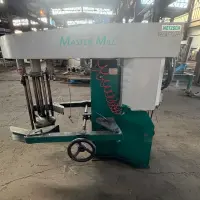
Netzsch Submersible Basket Mill, Model MasterMill 18, S/S
中古のネッツシュ社製水中バスケットミル、型式 MasterMill 18、ステンレス製、シリアル番号 2406、2012年製造。
NETZSCH - MasterMill 18
2 Gal Reynolds Dual Shaft Vacuum Mixer System, Model 2/1 HP Lab Elect DSM
中古の2ガロン・レイノルズ製デュアルシャフト真空ミキサーシステム、モデル2/1 HP Lab Elect DSM、製品接触面はステンレス製、高速分散ブレード付き、2 hpモーター駆動、1 hpモーター駆動のヘリカルアンカー低速ブレード、真空カバー、 内部は完全真空に対応したジャケット付き混合缶、15 psiまでの耐圧ジャケット付き、油圧リフト、レイノルズ製排出プレスを一体化したユニット、油圧作動式、プレスおよびミキサーリフト用の2 hp油圧パワーパック付き、ロット番号 NH-2116、2013年製造。
レイノルズ - 2/1 HP Lab Elect DSM