

Dispersers, also known as dispersal agents or dispersal vectors, are organisms or mechanisms that facilitate the movement of seeds, spores, or other reproductive structures away from the parent plant or organism. The dispersal process is crucial for the survival and distribution of many plant and fungal species, as it allows them to colonize new habitats, escape competition, and avoid inbreeding. Dispersers can be classified into two main categories: biotic and abiotic. Biotic dispersers are living organisms that actively transport seeds or spores. They include animals such as birds, mammals, insects, and reptiles. These organisms often consume the fruits or seeds of plants and then excrete them in a different location, allowing for seed dispersal. Some animals also disperse seeds by attaching them to their fur or feathers or by burying them for later consumption. Abiotic dispersers, on the other hand, are non-living factors that aid in seed or spore dispersal. These can include wind, water, gravity, or even human activities. Wind dispersal, or anemochory, is particularly common in plants with lightweight seeds or structures that act as parachutes or wings, enabling them to be carried by air currents. Water dispersal, or hydrochory, is prevalent in aquatic or riparian plants that produce buoyant seeds or fruits. Gravity dispersal, or barochory, occurs when heavy fruits or seeds fall from the parent plant and roll or bounce away. Human activities, such as agriculture, gardening, or unintentional transportation, can also act as dispersal agents. The effectiveness of dispersers depends on various factors, including the characteristics of the dispersal agent, the structure of the seed or spore, and the environment. Dispersal can have both positive and negative impacts on plant populations. It can enhance genetic diversity, promote colonization of new habitats, and facilitate species interactions. However, it can also lead to competition, predation, or the colonization of unsuitable habitats. In conclusion, dispersers play a crucial role in the movement and distribution of seeds and spores. They can be biotic or abiotic agents that aid in the survival and dispersal of plant and fungal species. Understanding dispersal mechanisms is essential for studying plant ecology, conservation, and the dynamics of ecosystems.
Acquisti e venda apparecchiature Dispersers usate presso FEC Assets. Offriamo un'ampia selezione di apparecchiature Dispersers di seconda mano, ricondizionate e usate per l'industria farmaceutica, chimica, alimentare e del packaging. Sfoglia il nostro inventario attuale di apparecchiature Dispersers usate in vendita, oppure ci contatti per vendere le sue apparecchiature Dispersers in eccedenza attraverso il nostro servizio professionale di recupero degli investimenti.
Dispersers Produttori
Armeco
Il nostro inventario Armeco comprende 1 articolo, classificato nella categoria "dispersori"; al mome
CAYUGA
FEC Assets presenta 1 articolo CAYUGA usato, classificato nella categoria "dispersori". È attualment

Hockmeyer
FEC Assets ha messo in vendita 9 articoli Hockmeyer usati; 8 sono attualmente disponibili in magazzi
Joshua Greave
Su FEC Assets è stato inserito 1 articolo usato di Joshua Greave; è attualmente disponibile in magaz

Myers
FEC Assets ha messo in vendita 8 articoli Myers di seconda mano; 6 sono attualmente disponibili a ma
Reynolds
Su FEC Assets è stato inserito 1 articolo Reynolds usato; è attualmente disponibile in magazzino, ne
Filtro
Categorie principali
(1)Categorie
(1)Anno di costruzione
(3)Produttori
(6)Modelli
(7)Luoghi
(2)Cianografie
Numero di serie
Pressione della giacca
Recipiente di miscelazione
Rivestito
Valutato per il vuoto

2 Gal Reynolds Dual Shaft Vacuum Mixer System, Model 2/1 HP Lab Elect DSM
Sistema di miscelazione sottovuoto a doppio albero Reynolds da 2 gal, modello 2/1 HP Lab Elect DSM, superfici a contatto con il prodotto in acciaio inossidabile, con lama di dispersione ad alta velocità azionata da un motore da 2 hp, lama elicoidale a bassa velocità azionata da un motore da 1 hp, coperchio sottovuoto, vasca di miscelazione a camicia in grado di raggiungere il vuoto totale all’inte...
Reynolds - 2/1 HP Lab Elect DSM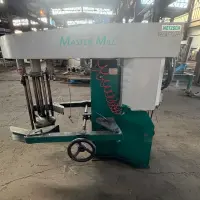
Netzsch Submersible Basket Mill, Model MasterMill 18, S/S
Mulino a cestello sommergibile Netzsch usato, modello MasterMill 18, acciaio inossidabile, n. di serie 2406, anno di costruzione 2012.
NETZSCH - MasterMill 18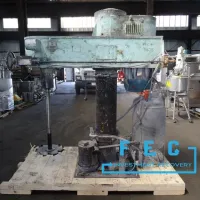
25 HP Hockmeyer Disperser, S/S, XP
Dispersore Hockmeyer da 25 CV, modello HVR25, albero in acciaio inox da 2,5 pollici di diametro con lama in acciaio inox da 18 pollici di diametro, motore xp da 25 CV, 230/460 volt, velocità variabile, sollevatore idraulico ad aria su olio con serbatoio dell'aria, montato a pavimento.
Hockmeyer - HVR25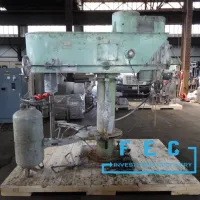
25 HP Hockmeyer Mixer, C/S, XP
Miscelatore a cravatta Hockmeyer da 25 CV, modello HVM-25, albero in acciaio al carbonio da 3,5" di diametro con (1) pale in acciaio al carbonio da 28" e (1) diametri da 32", motore xp da 25 CV, 230/460 volt, velocità variabile, sollevatore idraulico ad aria su olio con serbatoio dell'aria, montato a pavimento, numero di serie 94-11-2824.
Hockmeyer - HVM-25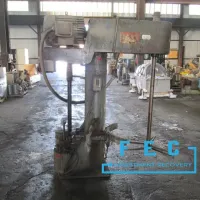
30 HP Myers Bow Tie Mixer, C/S
Miscelatore a bassa velocità Myers bow tie, modello 350-30, albero e lama in acciaio al carbonio, motore da 30 CV, 220/440 volt, sollevatore idraulico da 0,75 CV, 220/440 volt con pompa, montato a pavimento, numero di serie 115.
Myers - 350-30
60/10 HP Joshua Greaves Dual Shaft Disperser, S/S, XP
Dispersore Joshua Greaves a doppio albero montato su serbatoio, modello D/Action, struttura in acciaio inox, agitatore ad ancora montato al centro con raschiatura della parete laterale azionato da un motore xp da 7,5 CV, 460 volt.5 CV, 460 volt, motore xp, dispersore ad alta velocità decentrato azionato da un motore xp da 45 kw, 460 volt, 1770 giri/min, montato su un serbatoio incamiciato in accia...
Joshua Greave - D/Action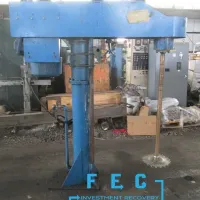
20 HP Cayuga Disperser, S/S
Dispersore Cayuga da 20 HP, modello L7BVS19025, albero e lama in acciaio inox, montato a pavimento, numero di serie 7303051. Necessita di un serbatoio d'aria.
CAYUGA - L7BVS19025