

Vacuum pumps are devices used to remove gas molecules from a sealed volume, creating a vacuum or low-pressure environment. They are widely used in various industries, including manufacturing, pharmaceuticals, food processing, and scientific research. One type of vacuum pump is the liquid ring vacuum pump. It operates by using a liquid, typically water, as the sealing and cooling medium. The pump consists of an impeller with blades that rotate inside a cylindrical casing. As the impeller rotates, it creates a centrifugal force that pushes the liquid towards the casing walls, forming a liquid ring. This liquid ring acts as a seal between the suction and discharge sides of the pump. When the pump is in operation, gas is drawn into the pump through the suction port. The rotating impeller then compresses the gas, causing it to be trapped in the liquid ring. The gas is then expelled through the discharge port, while the liquid ring absorbs the heat generated during compression. The liquid ring also acts as a lubricant for the impeller, reducing wear and extending the pump's lifespan. Liquid ring vacuum pumps have several advantages. They can handle a wide range of gases, including corrosive and explosive ones. They are also capable of handling liquid carryover, making them suitable for applications where liquid and gas mixtures are present. Additionally, they are relatively simple in design, easy to operate, and require minimal maintenance. However, liquid ring vacuum pumps have some limitations. They are not as efficient as other types of vacuum pumps, such as rotary vane pumps, and may consume more energy. They also require a constant supply of liquid, which can be a limitation in certain environments. Furthermore, the liquid ring can be susceptible to contamination, which may affect the pump's performance. In summary, liquid ring vacuum pumps are devices that use a liquid ring to create a vacuum by removing gas molecules from a sealed volume. They have various applications but may have lower efficiency compared to other vacuum pump types and require a constant liquid supply.
Achetez et vendez des équipements Liquid Ring d'occasion chez FEC Assets. Nous offrons une large sélection d'équipements Liquid Ring de seconde main, remis à neuf et d'occasion pour les industries pharmaceutiques, chimiques, alimentaires et d'emballage. Consultez notre inventaire actuel d'équipements Liquid Ring d'occasion à vendre, ou contactez-nous pour vendre vos équipements Liquid Ring excédentaires par le biais de notre service professionnel de récupération des investissements.
Liquid Ring Fabricants
Nash
Nash est une entreprise renommée spécialisée dans la fabrication de pompes à vide à anneau liquide.
SIHI
SIHI, acronyme de Sterling SIHI, est une entreprise reconnue pour son expertise dans le domaine des
Filtre
Catégories principales
(1)Catégories
(1)Fabricants
(1)Modèles
(3)Localisation des sites
(2)Numéro de série
Type de pompe
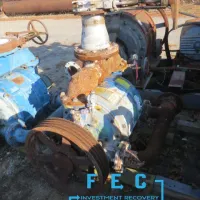
Nash Vacuum Pump, Model CL1003, 1,000 CFM
Pompe à vide à anneau liquide Nash, modèle CL1003, 1 000 CFM, construite en 2008.
Nash - CL1003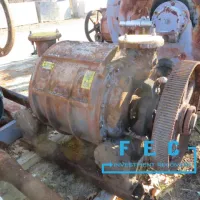
Nash Vacuum Pump, Model CL2000, 2,000 CFM, 100 HP
Pompe à vide à anneau liquide Nash, modèle CL2000, 2 000 CFM, avec moteur 100 hp, 1780 RPM, 460 volt.
Nash - CL2000
Nash Vacuum Pump System, Model SC 2/7, C/S, 200 CFM, 10 HP, (2)
Système de vide Nash usagé, composé de (2) pompes à vide Nash modèle SC2/7, construction en acier au carbone, d'une capacité nominale de 200 cfm chacune, avec un moteur de 10 hp, 230/460 volts avec silencieux, montées sur une base unitisée avec panneau de contrôle, numéros de série des pompes 99D1979, 03D0308.
Nash - SC2/7