

Motors are devices that convert electrical energy into mechanical energy. They are widely used in various applications, ranging from household appliances to industrial machinery. The basic principle behind motors is electromagnetic induction, where a magnetic field is generated by passing an electric current through a coil of wire. This magnetic field interacts with other magnetic fields, causing the coil to rotate and produce mechanical motion. There are different types of motors, including DC motors and AC motors. DC motors operate using direct current, while AC motors operate using alternating current. DC motors are commonly used in applications that require precise control of speed and torque, such as robotics and electric vehicles. AC motors, on the other hand, are more commonly used in household appliances and industrial machinery due to their simplicity and reliability. Motors have various components, including a rotor (the rotating part) and a stator (the stationary part). The rotor is usually made of a permanent magnet or electromagnets, while the stator consists of coils of wire that generate the magnetic field. The interaction between the rotor and stator magnetic fields creates a force that causes the rotor to rotate. Motors have certain limitations, such as efficiency and power limitations. Efficiency refers to the ability of a motor to convert electrical energy into mechanical energy without significant losses. Motors can have different efficiency levels depending on their design and operating conditions. Power limitations refer to the maximum power output a motor can provide. This is determined by factors such as the motor's size, cooling capabilities, and the electrical current it can handle. In conclusion, motors are electrical devices that convert electrical energy into mechanical energy through electromagnetic induction. They are essential in various applications and come in different types, such as DC and AC motors. Motors have certain limitations, including efficiency and power limitations, which need to be considered when selecting and using them in different applications.
Compre y venda equipos Motors Electrical de segunda mano en FEC Assets. Ofrecemos una amplia selección de equipos Motors Electrical de segunda mano, reacondicionados y de ocasión para las industrias farmacéutica, química, alimentaria y de envasado. Consulte nuestro inventario actual de equipos Motors Electrical usados en venta, o póngase en contacto con nosotros para vender su equipo Motors Electrical excedente a través de nuestro servicio profesional de recuperación de inversiones.
Motors Electrical Fabricantes

Siemens
Siemens es una empresa líder a nivel mundial en los sectores de la industria, la energía, la sanidad

Westinghouse
Westinghouse es una empresa de renombre especializada en la fabricación de motores y equipos eléctri

toshiba
Toshiba Corporation es un conglomerado multinacional de renombre especializado en diversas industria
Filtrar
Categorías principales
(1)Categorías
(1)Fabricantes
(3)Modelos
(3)Localizaciones
(1)Índices de peligrosidad
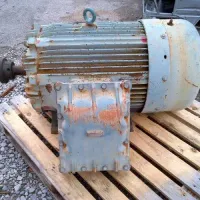
100 HP Toshiba B1002YLG3AM Hazardous Location Motor
Motor Toshiba para zonas peligrosas usado modelo B1002YLG3AM 100 CV, TEFC, 230/460 voltios, 3600 RPM, bastidor 405TS. Clase 1 Grupo D, Clase 2 Grupo E F G, Temperatura T3B.
Toshiba - B1002YLG3AM