

Vacuum pumps are devices used to remove gas molecules from a sealed volume, creating a vacuum or low-pressure environment. They are widely used in various industries, including manufacturing, pharmaceuticals, food processing, and scientific research. One type of vacuum pump is the liquid ring vacuum pump. It operates by using a liquid, typically water, as the sealing and cooling medium. The pump consists of an impeller with blades that rotate inside a cylindrical casing. As the impeller rotates, it creates a centrifugal force that pushes the liquid towards the casing walls, forming a liquid ring. This liquid ring acts as a seal between the suction and discharge sides of the pump. When the pump is in operation, gas is drawn into the pump through the suction port. The rotating impeller then compresses the gas, causing it to be trapped in the liquid ring. The gas is then expelled through the discharge port, while the liquid ring absorbs the heat generated during compression. The liquid ring also acts as a lubricant for the impeller, reducing wear and extending the pump's lifespan. Liquid ring vacuum pumps have several advantages. They can handle a wide range of gases, including corrosive and explosive ones. They are also capable of handling liquid carryover, making them suitable for applications where liquid and gas mixtures are present. Additionally, they are relatively simple in design, easy to operate, and require minimal maintenance. However, liquid ring vacuum pumps have some limitations. They are not as efficient as other types of vacuum pumps, such as rotary vane pumps, and may consume more energy. They also require a constant supply of liquid, which can be a limitation in certain environments. Furthermore, the liquid ring can be susceptible to contamination, which may affect the pump's performance. In summary, liquid ring vacuum pumps are devices that use a liquid ring to create a vacuum by removing gas molecules from a sealed volume. They have various applications but may have lower efficiency compared to other vacuum pump types and require a constant liquid supply.
Compre y venda equipos Liquid Ring de segunda mano en FEC Assets. Ofrecemos una amplia selección de equipos Liquid Ring de segunda mano, reacondicionados y de ocasión para las industrias farmacéutica, química, alimentaria y de envasado. Consulte nuestro inventario actual de equipos Liquid Ring usados en venta, o póngase en contacto con nosotros para vender su equipo Liquid Ring excedente a través de nuestro servicio profesional de recuperación de inversiones.
Liquid Ring Fabricantes
Nash
Nash es una empresa de renombre especializada en la fabricación de bombas de vacío de anillo líquido
SIHI
SIHI, siglas de Sterling SIHI, es una empresa reconocida por su experiencia en tecnología de manejo
Filtrar
Categorías principales
(1)Categorías
(1)Fabricantes
(1)Modelos
(3)Localizaciones
(2)Número de serie
Tipo de bomba
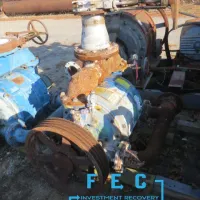
Nash Vacuum Pump, Model CL1003, 1,000 CFM
Bomba de vacío de anillo líquido Nash usada, modelo CL1003, nominal de 1.000 CFM, fabricada en 2008
Nash - CL1003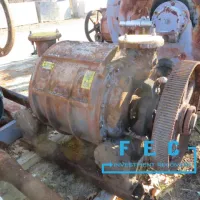
Nash Vacuum Pump, Model CL2000, 2,000 CFM, 100 HP
Bomba de vacío de anillo líquido Nash usada, modelo CL2000, de 2.000 CFM, con motor de 100 CV, 1780 RPM, 460 voltios.
Nash - CL2000
Nash Vacuum Pump System, Model SC 2/7, C/S, 200 CFM, 10 HP, (2)
Sistema de vacío Nash usado, consistente en (2) bombas de vacío nash modelo SC2/7, construcción de acero al carbono, nominalmente de 200 cfm cada una, con motor de 10 hp, 230/460 voltios con silenciadores, montadas sobre base unificada con panel de control, números de serie de las bombas 99D1979, 03D0308.
Nash - SC2/7