

Dispersers, also known as dispersal agents or dispersal vectors, are organisms or mechanisms that facilitate the movement of seeds, spores, or other reproductive structures away from the parent plant or organism. The dispersal process is crucial for the survival and distribution of many plant and fungal species, as it allows them to colonize new habitats, escape competition, and avoid inbreeding. Dispersers can be classified into two main categories: biotic and abiotic. Biotic dispersers are living organisms that actively transport seeds or spores. They include animals such as birds, mammals, insects, and reptiles. These organisms often consume the fruits or seeds of plants and then excrete them in a different location, allowing for seed dispersal. Some animals also disperse seeds by attaching them to their fur or feathers or by burying them for later consumption. Abiotic dispersers, on the other hand, are non-living factors that aid in seed or spore dispersal. These can include wind, water, gravity, or even human activities. Wind dispersal, or anemochory, is particularly common in plants with lightweight seeds or structures that act as parachutes or wings, enabling them to be carried by air currents. Water dispersal, or hydrochory, is prevalent in aquatic or riparian plants that produce buoyant seeds or fruits. Gravity dispersal, or barochory, occurs when heavy fruits or seeds fall from the parent plant and roll or bounce away. Human activities, such as agriculture, gardening, or unintentional transportation, can also act as dispersal agents. The effectiveness of dispersers depends on various factors, including the characteristics of the dispersal agent, the structure of the seed or spore, and the environment. Dispersal can have both positive and negative impacts on plant populations. It can enhance genetic diversity, promote colonization of new habitats, and facilitate species interactions. However, it can also lead to competition, predation, or the colonization of unsuitable habitats. In conclusion, dispersers play a crucial role in the movement and distribution of seeds and spores. They can be biotic or abiotic agents that aid in the survival and dispersal of plant and fungal species. Understanding dispersal mechanisms is essential for studying plant ecology, conservation, and the dynamics of ecosystems.
Αγοράστε και πουλήστε μεταχειρισμένο εξοπλισμό Dispersers στο FEC Assets. Προσφέρουμε μια ευρεία επιλογή μεταχειρισμένου, ανακαινισμένου και μεταχειρισμένου εξοπλισμού Dispersers για τις βιομηχανίες φαρμάκων, χημικών προϊόντων, τροφίμων και συσκευασίας. Περιηγηθείτε στο τρέχον απόθεμα μεταχειρισμένου εξοπλισμού Dispersers προς πώληση ή επικοινωνήστε μαζί μας για να πουλήσετε τον πλεονάζοντα εξοπλισμό Dispersers μέσω της επαγγελματικής υπηρεσίας ανάκτησης επενδύσεων.
Dispersers Κατασκευαστές
Armeco
Το απόθεμά μας της Armeco περιλαμβάνει 1 προϊόν, το οποίο καταχωρίζεται στην κατηγορία «διασκορπιστέ
CAYUGA
Η FEC Assets διαθέτει 1 μεταχειρισμένο προϊόν της CAYUGA, το οποίο περιλαμβάνεται στην κατηγορία «δι

Hockmeyer
Η FEC Assets έχει καταχωρίσει 9 μεταχειρισμένα προϊόντα της Hockmeyer· τα 8 είναι διαθέσιμα αυτή τη
Joshua Greave
Ένα μεταχειρισμένο προϊόν της Joshua Greave έχει καταχωριστεί στο FEC Assets· είναι διαθέσιμο αυτή τ

Myers
Η FEC Assets έχει καταχωρίσει 8 μεταχειρισμένα προϊόντα της Myers· τα 6 είναι διαθέσιμα αυτή τη στιγ
Reynolds
Ένα μεταχειρισμένο προϊόν της Reynolds έχει καταχωριστεί στο FEC Assets· είναι διαθέσιμο αυτή τη στι
Φίλτρο
Κύριες κατηγορίες
(1)Κατηγορίες
(1)Έτος κατασκευής
(3)Κατασκευαστές
(6)Μοντέλα
(7)Τοποθεσίες
(2)Jacketed
Αύξων αριθμός
Βαθμολογημένο με κενό
Δοχείο ανάμιξης
Πίεση μανδύα
Σχεδιαγράμματα

2 Gal Reynolds Dual Shaft Vacuum Mixer System, Model 2/1 HP Lab Elect DSM
Μεταχειρισμένο σύστημα αναμικτήρα κενού Reynolds διπλού άξονα 2 γαλόνια, μοντέλο 2/1 HP Lab Elect DSM, επιφάνειες επαφής με το προϊόν από ανοξείδωτο χάλυβα, με λεπίδα διασποράς υψηλής ταχύτητας, που κινείται από κινητήρα 2 hp, ελικοειδή λεπίδα αγκύρωσης χαμηλής ταχύτητας που κινείται από κινητήρα 1 hp, κάλυμμα κενού, δοχείο ανάμειξης με μανδύα, ικανό για πλήρη εσωτερικό κενό, με μανδύα για 15 psi,...
Reynolds - 2/1 HP Lab Elect DSM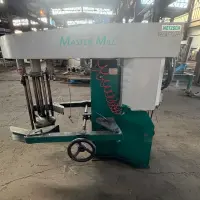
Netzsch Submersible Basket Mill, Model MasterMill 18, S/S
Μεταχειρισμένος υποβρύχιος μύλος με καλάθι της Netzsch, μοντέλο MasterMill 18, από ανοξείδωτο χάλυβα, αριθμός σειράς 2406, κατασκευής 2012.
NETZSCH - MasterMill 18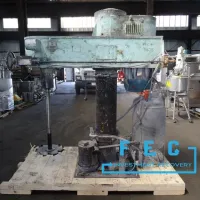
25 HP Hockmeyer Disperser, S/S, XP
Μεταχειρισμένος διασκορπιστής Hockmeyer 25 hp, μοντέλο HVR25, άξονας από ανοξείδωτο χάλυβα διαμέτρου 2,5" με λεπίδα από ανοξείδωτο χάλυβα διαμέτρου 18", κινητήρας xp 25 hp, 230/460 volt, μεταβλητή ταχύτητα, υδραυλική ανύψωση με αέρα πάνω από λάδι με δεξαμενή αέρα, τοποθετημένος στο δάπεδο.
Hockmeyer - HVR25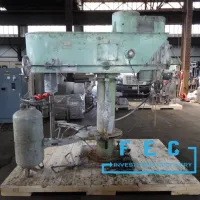
25 HP Hockmeyer Mixer, C/S, XP
Μεταχειρισμένος μίξερ Hockmeyer 25 hp bow tie, μοντέλο HVM-25, άξονας από ανθρακούχο χάλυβα διαμέτρου 3,5" με (1) 28" και (1) 32" λεπίδες από ανθρακούχο χάλυβα, μοτέρ 25 hp, 230/460 volt xp, μεταβλητή ταχύτητα, υδραυλικό ανυψωτικό σύστημα με αέρα πάνω από λάδι με δεξαμενή αέρα, τοποθετημένο στο δάπεδο, σειριακό αριθμό 94-11-2824.
Hockmeyer - HVM-25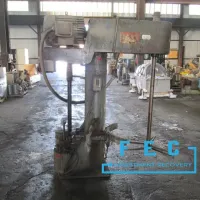
30 HP Myers Bow Tie Mixer, C/S
Μεταχειρισμένος αναμικτήρας αργής ταχύτητας Myers bow tie, μοντέλο 350-30, άξονας και λεπίδα από ανθρακούχο χάλυβα, μοτέρ 30 hp, 220/440 volt, υδραυλικός ανελκυστήρας 0,75 hp, 220/440 volt με αντλία, τοποθετημένος στο δάπεδο, σειριακό αριθμό 115.
Myers - 350-30
60/10 HP Joshua Greaves Dual Shaft Disperser, S/S, XP
Μεταχειρισμένος διασκορπιστής διπλού άξονα της Joshua Greaves με δεξαμενή, μοντέλο D / Action, κατασκευή από ανοξείδωτο χάλυβα, αναδευτήρας άγκυρας τοποθετημένος στο κέντρο με απόξεση πλευρικού τοιχώματος που οδηγείται από 7.5 hp, 460 volt xp motor drive, off center high speed disperser driven by 45 kw, 460 volt, 1770 rpm xp motor, mounted on approximately 1800 liter stainless steel jacketed tank,...
Joshua Greave - D/Action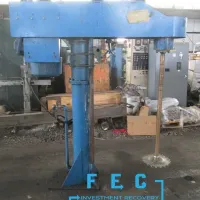
20 HP Cayuga Disperser, S/S
Μεταχειρισμένος διασκορπιστής Cayuga 20 HP, μοντέλο L7BVS19025, άξονας και λεπίδα από ανοξείδωτο χάλυβα, τοποθετημένος στο δάπεδο, σειριακή σειρά 7303051. Χρειάζεται δεξαμενή αέρα.
CAYUGA - L7BVS19025