

Dispersers, also known as dispersal agents or dispersal vectors, are organisms or mechanisms that facilitate the movement of seeds, spores, or other reproductive structures away from the parent plant or organism. The dispersal process is crucial for the survival and distribution of many plant and fungal species, as it allows them to colonize new habitats, escape competition, and avoid inbreeding. Dispersers can be classified into two main categories: biotic and abiotic. Biotic dispersers are living organisms that actively transport seeds or spores. They include animals such as birds, mammals, insects, and reptiles. These organisms often consume the fruits or seeds of plants and then excrete them in a different location, allowing for seed dispersal. Some animals also disperse seeds by attaching them to their fur or feathers or by burying them for later consumption. Abiotic dispersers, on the other hand, are non-living factors that aid in seed or spore dispersal. These can include wind, water, gravity, or even human activities. Wind dispersal, or anemochory, is particularly common in plants with lightweight seeds or structures that act as parachutes or wings, enabling them to be carried by air currents. Water dispersal, or hydrochory, is prevalent in aquatic or riparian plants that produce buoyant seeds or fruits. Gravity dispersal, or barochory, occurs when heavy fruits or seeds fall from the parent plant and roll or bounce away. Human activities, such as agriculture, gardening, or unintentional transportation, can also act as dispersal agents. The effectiveness of dispersers depends on various factors, including the characteristics of the dispersal agent, the structure of the seed or spore, and the environment. Dispersal can have both positive and negative impacts on plant populations. It can enhance genetic diversity, promote colonization of new habitats, and facilitate species interactions. However, it can also lead to competition, predation, or the colonization of unsuitable habitats. In conclusion, dispersers play a crucial role in the movement and distribution of seeds and spores. They can be biotic or abiotic agents that aid in the survival and dispersal of plant and fungal species. Understanding dispersal mechanisms is essential for studying plant ecology, conservation, and the dynamics of ecosystems.
Kaufen und verkaufen Sie gebrauchte Dispersers Geräte bei FEC Assets. Wir bieten eine große Auswahl an gebrauchten, überholten und gebrauchten Dispersers Anlagen für die Pharma-, Chemie-, Lebensmittel- und Verpackungsindustrie. Stöbern Sie in unserem aktuellen Bestand an gebrauchten Dispersers-Geräten, die zum Verkauf stehen, oder kontaktieren Sie uns, um Ihre überschüssigen Dispersers-Geräte über unseren professionellen Investitionsrückgewinnungsdienst zu verkaufen.
Dispersers Hersteller
Armeco
Unser Armeco-Lagerbestand umfasst 1 Artikel, der unter „Dispergiergeräte“ aufgeführt ist; dieser ist
CAYUGA
FEC Assets führt 1 gebrauchten Artikel der Marke CAYUGA, der unter „Verteiler“ gelistet ist. Er ist

Hockmeyer
FEC Assets hat 9 gebrauchte Hockmeyer-Artikel gelistet; 8 davon sind derzeit auf Lager und unter der
Joshua Greave
Bei FEC Assets wurde 1 gebrauchter Artikel von Joshua Greave eingestellt; er ist derzeit vorrätig un

Myers
FEC Assets hat 8 gebrauchte Myers-Artikel gelistet; 6 davon sind derzeit auf Lager, hauptsächlich Di
Reynolds
1 gebrauchter Artikel der Marke Reynolds wurde bei FEC Assets eingestellt; er ist derzeit vorrätig u
Filter
Hauptkategorien
(1)Kategorien
(1)Jahr der Errichtung
(3)Hersteller
(6)Modelle
(7)Standorte
(2)Blaupausen
Manteldruck
Mischgefäß
Seriennummer
Ummantelt
Vakuumtauglich

2 Gal Reynolds Dual Shaft Vacuum Mixer System, Model 2/1 HP Lab Elect DSM
Gebrauchtes 2-Gallonen-Reynolds-Doppelwellen-Vakuummischsystem, Modell 2/1 HP Lab Elect DSM, produktberührende Oberflächen aus Edelstahl, mit Hochgeschwindigkeits-Dispergierflügel, angetrieben von einem 2-HP-Motor, langsam laufendem Schraubenankerflügel, angetrieben von einem 1-HP-Motor, Vakuumabdeckung, doppelmanteliger Mischbehälter, der im Inneren für Vollvakuum ausgelegt ist, doppelmantelig fü...
Reynolds - 2/1 HP Lab Elect DSM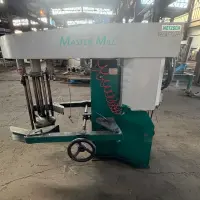
Netzsch Submersible Basket Mill, Model MasterMill 18, S/S
Gebrauchte Netzsch-Tauchkorbmühle, Modell MasterMill 18, Edelstahl, Seriennummer 2406, Baujahr 2012.
NETZSCH - MasterMill 18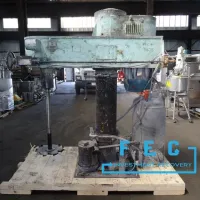
25 HP Hockmeyer Disperser, S/S, XP
Gebrauchte 25 PS Hockmeyer Dispergiermaschine, Modell HVR25, Edelstahlwelle mit 2,5" Durchmesser und Edelstahlklinge mit 18" Durchmesser, 25 PS, 230/460 Volt xp Motor, variable Geschwindigkeit, Luft-Öl-Hydraulikheber mit Lufttank, Bodenmontage.
Hockmeyer - HVR25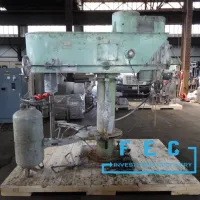
25 HP Hockmeyer Mixer, C/S, XP
Gebrauchter 25 PS Hockmeyer Fliegenmischer, Modell HVM-25, 3,5" Durchmesser Karbonstahlwelle mit (1)28" und (1)32" Diamerer Spannweite Karbonstahlschaufeln, 25 PS, 230/460 Volt xp Motor, variable Geschwindigkeit, Luft-Öl-Hydraulikheber mit Lufttank, Bodenmontage, Seriennummer 94-11-2824.
Hockmeyer - HVM-25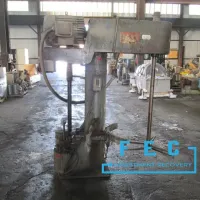
30 HP Myers Bow Tie Mixer, C/S
Gebrauchter Myers Bow Tie Slow Speed Mixer, Modell 350-30, Welle und Schaufel aus Kohlenstoffstahl, 30 PS, 220/440 Volt Motor, 0,75 PS, 220/440 Volt hydraulischer Heber mit Pumpe, Bodenmontage, Seriennummer 115.
Myers - 350-30
60/10 HP Joshua Greaves Dual Shaft Disperser, S/S, XP
Gebrauchter Joshua Greaves Doppelwellen-Dispergierer, Modell D/Action, Edelstahlkonstruktion, mittig montiertes Ankerrührwerk mit Seitenwandabstreifer, angetrieben von einem 7.5 PS, 460 Volt xp Motorantrieb, außermittiger Hochgeschwindigkeits-Dispergierer, angetrieben von einem 45 kW, 460 Volt, 1770 U/min xp Motor, montiert auf einem ca. 1800 Liter fassenden, ummantelten Edelstahltank, 4'6" Durchm...
Joshua Greave - D/Action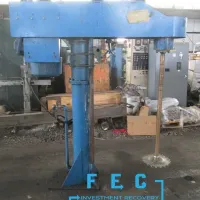
20 HP Cayuga Disperser, S/S
Gebrauchtes 20 PS Cayuga Dispergiergerät, Modell L7BVS19025, Welle und Schaufel aus Edelstahl, Bodenmontage, Seriennummer 7303051. Benötigt Lufttank.
CAYUGA - L7BVS19025