

Centrifuges are laboratory instruments used to separate components of a mixture based on their density and size. They work on the principle of centrifugal force, which is the force exerted on an object moving in a circular path. By spinning samples at high speeds, centrifuges generate this force, causing the denser particles to move towards the outer edge of the rotating disc, while the lighter particles remain closer to the center. A disc centrifuge is a type of centrifuge that consists of a rotating disc or rotor. The rotor is divided into several compartments or channels, which are filled with the sample to be separated. As the rotor spins, the centrifugal force pushes the particles towards the outer edge of the channels, forming distinct layers based on their density. The denser particles settle at the bottom of the channels, while the lighter particles remain closer to the top. Disc centrifuges are commonly used in various scientific and industrial applications. They are particularly useful for separating particles of different sizes, such as in blood samples, where they can separate red blood cells, white blood cells, and plasma. They are also used in the purification of proteins, separation of DNA fragments, and analysis of nanoparticles. One of the limitations of disc centrifuges is their limited capacity. The number of samples that can be processed simultaneously is determined by the number of channels in the rotor. Additionally, the separation efficiency may be affected by the size and density of the particles, as well as the speed and duration of the centrifugation process. Care must be taken to ensure that the samples are properly loaded and balanced to avoid any imbalances or disturbances during the centrifugation process. In conclusion, disc centrifuges are powerful tools for separating components of a mixture based on their density and size. They find applications in various scientific and industrial fields, but their capacity and separation efficiency are subject to certain limitations.
在 FEC Assets 购买和出售二手 Disc 设备。我们为制药、化工、食品和包装行业提供大量的二手、翻新和预售Disc设备。浏览我们当前待售的二手Disc设备库存,或联系我们,通过我们的专业投资回收服务出售您的剩余Disc设备。
Disc 制造商

Alfa Laval
阿尔法·拉瓦尔(Alfa Laval)的离心机还专为处理大量物料而设计,因此非常适合大规模工业应用。

GEA
GEA是面向食品、饮料和制药行业的机械、工艺技术及零部件供应商。 我们的 GEA 库存涵盖 12 种列出的设备,包括流化床干燥机、加工设备、盘式和剪切式混合机以及制粒机;其中 4 种目前有现货,8 种
Westfalia
我们的 Westfalia 库存涵盖 8 件上架商品,主要为盘式设备;其中 5 件目前有现货。型号包括 CA458-00-02、CSC20-06-476 和 CSA 8-06-476。
过滤器
主要类别
(1)类别
(1)建造年份
(2)制造商
(3)机型
(3)地点
(2)序列号
防爆
Alfa-Laval BD120C Centrifuge System
阿尔法·拉瓦尔 BD 120C 离心机系统包括:离心机:BD 120C 碟片式分离机;工艺及维护液模块;固体接收单元;气动单元;操作面板;PBM 阀门;浊度计;启动与控制系统;以及一套分离机专用工具。
Alfa Laval - BD120C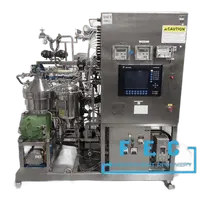
Westfalia Disc Centrifuge, Model CSA 8-06-476
二手 Westfalia 分离盘式离心机,型号 CSA 8-06-476,不锈钢产品接触面,液体/固体分离,额定转速 9,160 RPM,1.0 g/cc "重液体,1.5 g/cc 固体,1 bar 过压,由 7.5 马力 230/460 伏电机驱动,装在带泵和 Allen-Bradley PLC 及接口的橇上,离心机序列号 1711943,1996 年制造。
Westfalia - CSA 8-06-476
GEA Westfalia Clarifier, Model DSE 10-06-077
二手 GEA Westfalia 净化器,型号 DSE 10-06-077,不锈钢产品接触面,最大碗速 12000 转/分钟,密度 1 公斤/立方分米,固体容量 1.4 公斤/立方分米,吞吐量 0.15/.30 立方米/小时,带 PLC 控制,撬装式,序列号 1742-635,2022 年制造。
GEA - DSE 10-06-077